Archive for September 2012
Subaru Hybrid For 2014 To Echo Honda, GM Mild-Hybrid Approach
 Beyond the obvious Toyota, if any other make were to build hybrid cars, you might expect it to be Subaru.
The small Japanese company's cars are revered for durability and standard all-wheel drive, and their drivers are often assumed to be on the liberal side of center.
Subaru owners tend to cluster in mountainous enclaves of progressive politics, and data show their owners skew more Democratic than almost any other brand.
Now, at last, Subaru's hybrid plans are coming clear.
First hybrid in 2013
The company will launch its first hybrid vehicle in Japan within two years. That car will be a model of the Subaru Legacy mid-size sedan, most likely for the 2014 model year.
But according to a Subaru of America executive who briefed GreenCarReports on condition of anonymity, while development of the hybrid-electric drive technology is largely done, the company is still debating which vehicle will debut the hybrid system for the U.S. market.
Candidates include the popular Forester compact crossover utility vehicle, the equally popular Outback mid-size crossover, and perhaps the Legacy sedan as well.
Subaru could choose to put the system in its lowest-mileage vehicles (the larger Legacy and Outback), or increase the mileage of a more fuel efficient vehicle (the Impreza sedan or hatchback) to give the company a gas-mileage champion halo car.
Already the new 2012 Subaru Impreza will get 36 mpg on the highway, a substantial improvement over the 2011 model that gives it the highest gas mileage of any all-wheel drive car.
Mild hybrid a la Honda
The Subaru hybrid system, previewed in the Subaru B5 TPH Concept of 2005 and, at the 2009 Tokyo Motor Show, in the Subaru Hybrid Tourer concept, is a mild hybrid system very similar to Honda's Integrated Motor Assist (IMA) setup.
The General Motors eAssist system is conceptually similar, although the electric motor replaces the alternator rather than sitting between engine and transmission.
In the latest Subaru concept, a 10-kilowatt (13-horsepower) electric motor is sandwiched between a turbocharged 2.0-liter flat-four engine and the company's Lineartronic continuously variable transmission (CVT).
A lithium-ion battery pack, derived from the one used in the now-discontinued Japanese-market Stella EV electric minicar, provides power to the motor, which also recharges the battery during regenerative braking.
But unlike full hybrid systems like those used by Toyota, Ford, Hyundai, and others, the hybrid system is not powerful enough to propel the car on electricity alone.
Instead, it restarts the engine when the car begins to move away from a stop, and it contributes torque to supplement engine power, reducing the load on the engine and hence the fuel it consumes.
Toyota tech? Not so much
Since 2005, when Toyota purchased the share of Fuji Heavy Industries (Subaru's parent company) previously owned by General Motors, industry analysts had assumed that the small company would adopt Toyota's Hybrid Synergy Drive system--as Nissan did for its 2008-2011 Altima Hybrid, and Mazda plans to do.
But Subaru is a stubbornly independent company with a strong engineering culture. Aside from Porsche, it's the sole company offering horizontally opposed engines, which are smaller and give vehicles a lower center of gravity than inline engines.
Fitting Toyota's hybrid to a pancake engine might have posed its own challenges, but Subaru's engineers developed their hybrid system internally, along with the lithium-ion battery pack. And so the Subaru hybrid that will launch as a 2014 model will be a mild hybrid--a technology that Toyota doesn't offer.
The two companies are presently cooperating on a two-door sports coupe known as the FT-86. It will be sold as a Scion in the U.S., and the Subaru version--the brand's first rear-wheel drive car for the U.S. in almost 20 years--will be called the BRZ.
Source;
http://www.greencarreports.com/news/1066695_subaru-hybrid-for-2014-to-echo-honda-gm-mild-hybrid-approach
2012 Mini Coupe

And then there were five. The next exciting chapter to continue the success story of the MINI has begun to launch a brand new MINI Convertible, the fifth, a single model in the family.
In addition to sales of the MINI Hatch, Convertible, Clubman and the Countryman, the British built MINI Cabrio is the first of a two-seater sports brand in Britain, a long and proud history. It is a modern and authentic performance of a further development of the concept of vintage cars, that heady mix of the Mini to go anywhere attitude, and practicality of a new type of clientele.


2011 Acura RL
2011 Acura RL
 2011 Acura RL
 2011 Acura RL
 2011 Acura RL
 2011 Acura RL
 2011 Acura RL
 2011 Acura RL
 2011 Acura RL
 2011 Acura RL
 2011 Acura RL
The RL luxury sedan has long served as one of the most technologically advanced vehicles from Acura, and in 2011 made major improvements to raise the level again.To maximize the output of the 3.7L V-6, the RL receives a new SportShift sequential 6-speed automatic for 2011. In addition, the RL has a quieter cabin, even with the use of technology for the first single resonator in the wheel of a passenger vehicle.
With bold looks, a 300-hp engine and Acura acclaimed Super Handling All Wheel Drive ™ (SH-AWD ™), the RL 2011 shows that the luxury is perfectly complemented by advanced technology and the adrenaline of performance. In addition to providing luxury, style and performance that keeps Acura top-of-the-line sedan drivers more connected to their world (and the world around them), which offers some of the latest in intuitive, easy to use , the state-of-edge technology.
"The RL remains the benchmark for innovative use of relevant technologies to customers," said Jeff Conrad, vice president of Acura sales. "There are not many production cars at any price they offer the most advanced technology and sophistication of the transmission system."
The 2011 Acura RL goes on sale at Acura dealerships on December 21, 2010 and will be available in three trim levels. The MSRP for the RL will be $47,200, RL with Technology Package will be $51,350, and the RL with Advance Package will be $55,150.
Event data recorders to be in all new cars starting this year
 For years, new car owners have had their data recorded by a little black box similar to the one found in airplanes, but starting with 2011 models, automakers will be required to tell buyers of the presence of these recorders in their cars.
According to CarInsurance.com, event data recorders typically erase driver[, such as their speed and whether their seatbelt is fastened, unless an accident occurs, then the data is stored for use in investigations by attorneys and car insurance representatives.
"EDRs can provide information about a crash that can't be obtained through more traditional investigation techniques," Insurance Institute for Highway Safety said in a statement. "Police, crash investigators, automakers, insurance adjusters, and highway safety researchers can use this information to analyze what occurred during a crash."
Roughly 65 to 90 percent of new cars were equipped with EDRs in 2008, according to the National Highway Traffic Safety Administration.
According to After Market News, Mazda Motor and Bosch recently entered into a license agreement that would allow Bosch to access EDR information from the Mazda system. The partnership will allow Mazda cars to benefit from the Bosch Crash Data Retrieval tool, which is used by law enforcement, government agencies and insurance companies.
Source;
http://www.fundingway.com/news/624187/event-data-recorders-to-be-in-all-new-cars-starting-this-year/
For more info on EDR's follow the link below;
Event Data Recorders - Technical Report
What are they? Which automakers fit them? And are these devices friend or foe?
By Dennis Simanaitis @ Road & Track
http://www.roadandtrack.com/auto-news/tech/event-data-recorders
The Next Toyota Camry Coupe (Solara) Imagined
What if the brought back the Solara? Nice rendition anyways....

 Source (via www.autoblog.com);
http://www.theophiluschin.com/?p=3553
Source (via www.autoblog.com);http://www.theophiluschin.com/?p=3553
2011 Audi A6
2011 Audi A6

The new audi A6 is attractive stylish and fun to drive and price well against its competiton. The four door sedan or five door sedan is looks pretty good.

Under the world of auto there are three types of engines available a standard V6, super charged V6 and super V8. The new Audi A6 Adds a V6 super charger and cuts the displacement to 3.0 liters raising out put to 300 HP and 310 pound feet of torque that translates to 0-70 mph in just 60 seconds and 18/26 mpg.
A featured pack navigation system is common equipment on the 2011 Audi A6 the A6 have MMI interface
This is the little review of Audi A6 full review is here on another website.
Go Here


Details:-
MSRP $46,300
Invoice $43,038
Mitsubishi eclipse 2011
Mitsubishi eclipse 2011
 Mitsubishi eclipse 2011
 Mitsubishi eclipse 2011
 Mitsubishi eclipse 2011
 Mitsubishi eclipse 2011
 Mitsubishi eclipse 2011
 Mitsubishi eclipse 2011
 Mitsubishi eclipse 2011

Mitsubishi eclipse 2011
2011 Eclipse is a sporty luxury sedan available in two body styles including coupe and convertible Spyder. Both models offer four seating and is available in two trim levels. Trim levels are available GS Sport and GT Coupe Mitsubishi Eclipse is added to the base GS trim.Eclipse GS is equipped with some of the standard equipment, such as 18-inch alloy wheels, keyless entry, an efficient system of air conditioning, cruise control, tilt and telescopic steering column, audio system with six speakers and CD player, rear seats in the medium-term option, and full power accessories.
Eclipse GS Sport adds fog lamps, 18-inch wheels, leather seats, heated front, xenon headlights, heated mirrors, Rockford Fosgate audio system with nine speakers, six-CD, AUX-IN, steering wheel audio controls mounted satellite radio and sunroof.
2011 Mitsubishi Eclipse is built with standard safety equipment that provides maximum occupants. Some of the safety devices installed in the sedan are antilock brakes, side airbags and stability control of the seat. Coupe is installed with front side airbags and the Spyder model is installed with all length side airbags covering the head of the occupants. Insurance Institute for Highway Safety (IIHS) gave high marks to the front and side protection in case of discrepancy.
Mitsubishi eclipse 2011
Tag :
Mitsubishi,
Mitsubishi eclipse,
Inside Line: Comparison Test: 2012 Honda Civic Hybrid vs. 2011 Toyota Prius Five
Here's a really good article featuring two really good hybrids....


 The New and Improved Honda Takes on the Undisputed King of Hybrids
By Mike Magrath, Features Editor Published Aug 26, 2011
But, with each new phase in life, the C-word becomes more prominent. Bless those who can drive their caged Miatas, track-ready BMWs or cherry-bombed Corvettes on a daily basis. For the rest of us, though, a balance must be struck. Rear seats, fuel economy and tolerable in-cabin decibel levels become priorities and all of a sudden, a hybrid starts looking like a good idea.
Two of the best hybrids available right now are the 2011 Toyota Prius and the all-new 2012 Honda Civic Hybrid. They have four doors, reasonable cargo space, affordable prices and big-time fuel economy numbers. Each one has its own compromises, so we set out to find which car we found more tolerable, or maybe even likable.
One Old, One New
The Honda Civic Hybrid, on the other hand, utilizes a 1.5-liter four-cylinder gas engine and newer 20kW lithium-ion batteries, which have a higher energy density than nickel-metal hydride batteries. The electric motor in the Civic Hybrid is parked between the CVT and the car's conventional engine. This means that any time the motor spins, the engine spins and vice-versa. Honda calls this system IMA for Integrated Motor Assist. Unlike with the Prius, there's no pure electric drive, but there is some engineless coasting available at certain constant speeds. In the Civic, if the engine can be off without ruining the ride quality, it will be off thanks to the car's automatic start/stop functionality and active Eco mode.
The top tier of Priusdom is the Prius Five. (Do not confuse this with the Prius V.) For the privilege of being the most pampered, you get to shell out $29,080. And that's before options. We'd skip the $5,080 Advanced Technology package seen here (nav, dynamic cruise, pre-collision, advanced parking system, lane keeping assist) and opt for the $2,380 nav system instead. That move would lower the Prius from our MSRP of $34,719 to a more reasonable $32,489.
With all of this trimming, it's easy to forget that these cars start out as relatively inexpensive compacts. But beyond the leather, beyond the multimedia information screens and beyond the atypical powertrains, the way these cars drive makes you forget their natural station in life.
On the Road
The real surprise in this test was the ride quality of the 2012 Honda Civic Hybrid. It's good enough to ignore the painfully slow 0-30 time and the confused start/stop system that gets behind itself in slow traffic. It's good enough that every editor who had it came back with pretty much the same impression: "Dude, the ride."
It's an enviably good mix of damping and spring rates that results in a ride that isn't floaty or harsh. And despite its compliance over rough pavement, when the road gets bendy, the Civic Hybrid sets firmly without the body roll you'd expect from a hybrid. It is still a Civic after all. You'll never confuse this for a large car ride, yet you'll wonder why everyone talks up those big cars so much anyway.
We've had experiences with light cars where a few hundred pounds of gear really makes for a marked improvement in ride quality, and we think that's what's happening here, as the non-hybrid 2012 Civic wasn't this impressive. As impressive as the ride is, the Civic does suffer from higher levels of in-cabin noise than the Prius. From wind noise to tire noise to the crude stutter of the engine firing back to life, there's little peace found inside the Civic.
Because Driving for Fuel Economy Is Boring
Digging into the pavement from 60 mph, the 2,830-pound Civic managed to stop in a barely-Dodge-Power Wagon-beating 137 feet. Blame rear drums. Blame low-rolling-resistance Bridgestone Ecopia EP20 tires. Blame whom or whatever you want, the effect is a braking system that instills no driver confidence.
If you are presented with enough room to hold down the throttle without having to worry about any sort of emergency stop at the other end, the Civic Hybrid hits 60 in 10.1 seconds (9.7 seconds with 1 foot of rollout like on a drag strip) and goes on to complete the quarter-mile in 17.5 seconds at 80.1 mph.
The Prius lacked both the Civic's drama in braking and its familiar-if-not-pleasant engine note. Thanks to the slick CVT, the Prius' engine droned for 10.2 seconds when we hit 60 mph (9.8 seconds with rollout) and then for another 17.4 seconds as we ran the quarter-mile at 79.3 mph. When asked to stop from 60, the 3,138-pound Prius dug in and clawed out a perfectly standard 124-foot stop.
Things continued to be a relative tie in our handling tests. Despite the Prius being the poster child of terrible dynamics and the Civic's legacy as the real driver's economy car, the numbers were remarkably similar. The Toyota squealed around our skid pad at 0.79g while the Civic pulled 0.76g. The Toyota finished the slalom averaging 61.2 mph, behind the Civic's 62.8 mph.
And because this is that kind of test, the Honda recorded 20 mpg during track testing and the Prius flattened it with a whopping 24 mpg.
Because Gas Is Expensive
Could we have squeezed out more — potentially double — the miles per gallon by ignoring the flow of traffic, side-stepping hills and swapping our work schedules to reduce the chance of seeing another car? Sure. But we could do that with our current vehicles. The draw of a hybrid is that you don't have to change your behavior to improve your environmental impact.
So we picked editors with different commutes — heavy city traffic, light off-hours highway traffic and a near 50:50 mix of city and highway — and let them have at it with the charge that they're to drive as if their own dollars are on the line.
So we drove these two hybrids like we owned them and tabulated the results.
In our unstandardized, unstaged, real-world tests, the Toyota Prius fell below its 51 city/48 highway/50 combined EPA mpg estimate. We averaged just 39.8 mpg, with a best tank of 45.8 mpg and a worst tank of 34.9 mpg. The worst tank was a result of a long drive on a very empty freeway.
The Civic is rated by the EPA at 44 mpg. Everywhere. City: 44. Highway: 44. Combined? Yep, you guessed it. 44. And unlike the Prius, we managed to catch a glimpse of the elusive EPA number with one 44.8 mpg trek. Overall, though, we only squeezed 38.8 mpg out of the Civic Hybrid.
A 1 mile-per-gallon difference in the real world? Slight advantage to the Prius.
Because in Every Compromise, There's a LoserWe know why people buy hybrids. Be it carpool stickers or fitting in at the local Starbucks, there's an external motivator in the purchase that no math can dent.
Though it has a slight edge in ride quality, the 2012 Honda Civic Hybrid — with its normal dash, conventional shifter, traditional engine note and Civic-like driving dynamics — is almost too normal. It doesn't look special, it doesn't feel special and the IMA system compromises practicality and drivetrain smoothness. Each time the engine jumps back to life, hooking up to the transmission with the subtleness of a first-time clutch user, the compromises of a mixed drivetrain smack you square in the face.
The 2011 Toyota Prius was designed as a hybrid with a unique, instantly recognizable shape that emphasizes function over form and a drivetrain that channels the flow of power as seamlessly as runoff trickles into the Mississippi.
There are times to rebel, to swim against the school, and then there are times to fall in line. The easier compromise here is the car that makes you forget what real cars are like, that coddles and amuses as it delivers superlative fuel economy. In this case, that would be the Toyota Prius.
The New and Improved Honda Takes on the Undisputed King of HybridsBy Mike Magrath, Features Editor Published Aug 26, 2011
As an only child, I missed some valuable life lessons. Sharing for example. Group dynamics are confusing, too. And finally, my last character flaw as influenced by my parents' halted procreation, to me compromise is a dirty, dirty word.
But, with each new phase in life, the C-word becomes more prominent. Bless those who can drive their caged Miatas, track-ready BMWs or cherry-bombed Corvettes on a daily basis. For the rest of us, though, a balance must be struck. Rear seats, fuel economy and tolerable in-cabin decibel levels become priorities and all of a sudden, a hybrid starts looking like a good idea.
Two of the best hybrids available right now are the 2011 Toyota Prius and the all-new 2012 Honda Civic Hybrid. They have four doors, reasonable cargo space, affordable prices and big-time fuel economy numbers. Each one has its own compromises, so we set out to find which car we found more tolerable, or maybe even likable.
One Old, One New
The 2011 Toyota Prius is, mechanically, the same car we've seen before. It features a pair of electric motors and a 27 kW nickel-metal hydride battery pack that provides a 36-horsepower shove for the electric half of the equation. A 98-hp 1.8-liter Atkinson-cycle four-cylinder represents the conventional internal-combustion half. A planetary-type continuously variable transmission (CVT) figures out how to get the power to the front wheels. It's a respectable system that transitions smoothly between electric and full-blown hybrid mode.
The Honda Civic Hybrid, on the other hand, utilizes a 1.5-liter four-cylinder gas engine and newer 20kW lithium-ion batteries, which have a higher energy density than nickel-metal hydride batteries. The electric motor in the Civic Hybrid is parked between the CVT and the car's conventional engine. This means that any time the motor spins, the engine spins and vice-versa. Honda calls this system IMA for Integrated Motor Assist. Unlike with the Prius, there's no pure electric drive, but there is some engineless coasting available at certain constant speeds. In the Civic, if the engine can be off without ruining the ride quality, it will be off thanks to the car's automatic start/stop functionality and active Eco mode.
Because You Deserve It
There was already enough sacrifice going on in a test of two hybrids, so we skipped over the base model cars ($22,120 for the Prius One and $24,050 for the Honda Civic Hybrid) and went straight to the top. Our 2012 Honda Civic Hybrid with leather and navigation carried a sticker price of $27,500, which includes heated leather seats, navigation, Bluetooth, a tilt-and-telescoping steering wheel, 15-inch alloy wheels, automatic headlights and steering-wheel-mounted audio controls.
The top tier of Priusdom is the Prius Five. (Do not confuse this with the Prius V.) For the privilege of being the most pampered, you get to shell out $29,080. And that's before options. We'd skip the $5,080 Advanced Technology package seen here (nav, dynamic cruise, pre-collision, advanced parking system, lane keeping assist) and opt for the $2,380 nav system instead. That move would lower the Prius from our MSRP of $34,719 to a more reasonable $32,489.
With all of this trimming, it's easy to forget that these cars start out as relatively inexpensive compacts. But beyond the leather, beyond the multimedia information screens and beyond the atypical powertrains, the way these cars drive makes you forget their natural station in life.
On the Road
With a steeply raked windscreen, thin pillars and a low dash afforded by the centrally mounted everything, the Prius feels twice as big as it is — in a good way. There's no small-car intimidation factor. Perhaps this explains the way Prius drivers try to own the road.
The ride, too, mimics that of a large car, with minimal noise and harshness and a tendency to rebound a fairly impressive sine wave after severe impacts. And, like any decent large car, the Prius' steering and brakes are unobtrusive to the point of being annoying. The steering is weightier than that of previous Prii, but this is a result of reprogrammed steering electrons and not a revised, improved connection to the wheels.
On the Road
With a steeply raked windscreen, thin pillars and a low dash afforded by the centrally mounted everything, the Prius feels twice as big as it is — in a good way. There's no small-car intimidation factor. Perhaps this explains the way Prius drivers try to own the road. The ride, too, mimics that of a large car, with minimal noise and harshness and a tendency to rebound a fairly impressive sine wave after severe impacts. And, like any decent large car, the Prius' steering and brakes are unobtrusive to the point of being annoying. The steering is weightier than that of previous Prii, but this is a result of reprogrammed steering electrons and not a revised, improved connection to the wheels.
The real surprise in this test was the ride quality of the 2012 Honda Civic Hybrid. It's good enough to ignore the painfully slow 0-30 time and the confused start/stop system that gets behind itself in slow traffic. It's good enough that every editor who had it came back with pretty much the same impression: "Dude, the ride."
It's an enviably good mix of damping and spring rates that results in a ride that isn't floaty or harsh. And despite its compliance over rough pavement, when the road gets bendy, the Civic Hybrid sets firmly without the body roll you'd expect from a hybrid. It is still a Civic after all. You'll never confuse this for a large car ride, yet you'll wonder why everyone talks up those big cars so much anyway.
We've had experiences with light cars where a few hundred pounds of gear really makes for a marked improvement in ride quality, and we think that's what's happening here, as the non-hybrid 2012 Civic wasn't this impressive. As impressive as the ride is, the Civic does suffer from higher levels of in-cabin noise than the Prius. From wind noise to tire noise to the crude stutter of the engine firing back to life, there's little peace found inside the Civic.
Because Driving for Fuel Economy Is Boring
Before we donned our fuel-saving caps and glass-soled shoes, we had one last foray into the world we know best: the test track.
It feels wrong, but throttling the 2012 Honda Civic Hybrid on a closed track actually sounds right. It sounds normal. Like a Honda. Of course, it also comes to a stop like a Honda.
Digging into the pavement from 60 mph, the 2,830-pound Civic managed to stop in a barely-Dodge-Power Wagon-beating 137 feet. Blame rear drums. Blame low-rolling-resistance Bridgestone Ecopia EP20 tires. Blame whom or whatever you want, the effect is a braking system that instills no driver confidence.
If you are presented with enough room to hold down the throttle without having to worry about any sort of emergency stop at the other end, the Civic Hybrid hits 60 in 10.1 seconds (9.7 seconds with 1 foot of rollout like on a drag strip) and goes on to complete the quarter-mile in 17.5 seconds at 80.1 mph.
The Prius lacked both the Civic's drama in braking and its familiar-if-not-pleasant engine note. Thanks to the slick CVT, the Prius' engine droned for 10.2 seconds when we hit 60 mph (9.8 seconds with rollout) and then for another 17.4 seconds as we ran the quarter-mile at 79.3 mph. When asked to stop from 60, the 3,138-pound Prius dug in and clawed out a perfectly standard 124-foot stop.
Things continued to be a relative tie in our handling tests. Despite the Prius being the poster child of terrible dynamics and the Civic's legacy as the real driver's economy car, the numbers were remarkably similar. The Toyota squealed around our skid pad at 0.79g while the Civic pulled 0.76g. The Toyota finished the slalom averaging 61.2 mph, behind the Civic's 62.8 mph.
And because this is that kind of test, the Honda recorded 20 mpg during track testing and the Prius flattened it with a whopping 24 mpg.
Because Gas Is Expensive
The first thing you should know about this portion of our journey is that we did not do a fuel economy loop. Fuel economy loops are designed to simulate some ideal mix of traffic-free, low-and-medium-speed events with few stops, little incline and a slew of otherwise idealistic environments. They've got as much to do with real-world driving as a strip club does with dating. Sure, it's a neat benchmark, but you can't get disappointed when the real world doesn't quite live up to it.
Could we have squeezed out more — potentially double — the miles per gallon by ignoring the flow of traffic, side-stepping hills and swapping our work schedules to reduce the chance of seeing another car? Sure. But we could do that with our current vehicles. The draw of a hybrid is that you don't have to change your behavior to improve your environmental impact.
So we picked editors with different commutes — heavy city traffic, light off-hours highway traffic and a near 50:50 mix of city and highway — and let them have at it with the charge that they're to drive as if their own dollars are on the line.
So we drove these two hybrids like we owned them and tabulated the results.
In our unstandardized, unstaged, real-world tests, the Toyota Prius fell below its 51 city/48 highway/50 combined EPA mpg estimate. We averaged just 39.8 mpg, with a best tank of 45.8 mpg and a worst tank of 34.9 mpg. The worst tank was a result of a long drive on a very empty freeway.
The Civic is rated by the EPA at 44 mpg. Everywhere. City: 44. Highway: 44. Combined? Yep, you guessed it. 44. And unlike the Prius, we managed to catch a glimpse of the elusive EPA number with one 44.8 mpg trek. Overall, though, we only squeezed 38.8 mpg out of the Civic Hybrid.
A 1 mile-per-gallon difference in the real world? Slight advantage to the Prius.
Because in Every Compromise, There's a LoserWe know why people buy hybrids. Be it carpool stickers or fitting in at the local Starbucks, there's an external motivator in the purchase that no math can dent.
Though it has a slight edge in ride quality, the 2012 Honda Civic Hybrid — with its normal dash, conventional shifter, traditional engine note and Civic-like driving dynamics — is almost too normal. It doesn't look special, it doesn't feel special and the IMA system compromises practicality and drivetrain smoothness. Each time the engine jumps back to life, hooking up to the transmission with the subtleness of a first-time clutch user, the compromises of a mixed drivetrain smack you square in the face.
The 2011 Toyota Prius was designed as a hybrid with a unique, instantly recognizable shape that emphasizes function over form and a drivetrain that channels the flow of power as seamlessly as runoff trickles into the Mississippi.
There are times to rebel, to swim against the school, and then there are times to fall in line. The easier compromise here is the car that makes you forget what real cars are like, that coddles and amuses as it delivers superlative fuel economy. In this case, that would be the Toyota Prius.
The manufacturers provided Edmunds these vehicles for the purposes of evaluation.
Source;
http://www.insideline.com/toyota/prius/2011/comparison-test-2012-honda-civic-hybrid-vs-2011-toyota-prius-five.html
The New Honda Civic (Euro)


 Honda will launch the new Civic at the IAA Frankfurt Motor Show in September. Developed specifically for the European market, the Civic will be offered exclusively as a five-door hatchback and will compete in the C-segment. It will reach European showrooms in early 2012.
In the build-up to the reveal of the new Civic, Honda is releasing a series of short form films detailing its development. The third of these films focuses on noise and refinement.
NEW HONDA CIVIC: class-leading refinement
One of the focuses of the development team for the new Civic was optimising the interior refinement. The engineers worked intensively to hone every detail of the design, build and aerodynamics. The results add to a car that is relaxing to drive on all roads and in all conditions.
The engineers have spent a lot of time testing the car in Europe, tuning the new Civic to suit the distinctive road conditions. The team used Honda's anechoic chamber in its R&D Facility in Swindon, England, to fine-tune the cabin insulation. One of the results of this research was to modify the design and construction of the roof lining, and how it interacts with the bodywork.
The new Civic's aerodynamic efficiency also plays a key role in maximising its refinement. Several members of the development team have Formula One experience, which they used to deliver a car that combines a low coefficient of drag with excellent high-speed stability. Hours of meticulous work in the Honda wind tunnel has improved performance, reduced fuel consumption and resulted in an exceptionally quiet interior.
"We did not improve the noise and refinement of the new Civic through just one technique," says Kazuo Sunaoshi, Development Leader - Chassis. "It was the accumulation of lots of little details. My big challenge was to match the noise and vibration levels of our European competitors. I am proud to say that we have achieved our goals."
Find out more by watching the new ‘noise and refinement' film release. The film is hosted on an interactive media player where all the films will be shown and automatically updated. You can easily download films and images or even embed the whole player in your site http://multivu.com/players/English/51356-honda-motor-europe/
"We did not improve the noise and refinement of the new Civic through just one technique," says Kazuo Sunaoshi, Development Leader - Chassis. "It was the accumulation of lots of little details. My big challenge was to match the noise and vibration levels of our European competitors. I am proud to say that we have achieved our goals."
Find out more by watching the new ‘noise and refinement' film release. The film is hosted on an interactive media player where all the films will be shown and automatically updated. You can easily download films and images or even embed the whole player in your site http://multivu.com/players/English/51356-honda-motor-europe/
Source;
http://www.hondanews.eu/en/news/index.pmode/modul,detail,0,1939-DEFAULT,21,text,1/index.pmode
Honda Integra Reborn As Unusual Scooter/Motorcycle Hybrid
 Good news: The Honda Integra lives again! Bad news: instead of the small, sporty you’ve come to know and love as an Acura, the new Honda Integra is instead a big, funky-looking scooter.
Perhaps scooter isn’t exactly the right word for it. Honda dubs the Integra a “midsize motorcycle,” although its seating position, which puts the rider’s feet further forward than on a conventional bike, echoes the company’s large Silver Wing scooter.
Mechanically speaking, the motorcycle term is perhaps a bit more fitting. While the Silver Wing tops out with a 582-cc two-cylinder engine, the Integra utilizes a new liquid-cooled, 670-cc inline-twin. Power figures have yet to be released, but Honda says the engine delivers considerable low- and mid-range torque, catering to owners who prefer to ride at moderate speeds. A crankshaft with a 270-degree throw allegedly provides the “feel and character of a V-twin” while retaining the compact dimensions afforded by its inline configuration.
Unlike the Silver Wing, which uses a belt-based continuously variable transmission, the Integra is the second production Honda motorcycle to utilize a dual-clutch transmission. As is the case with the larger VFR-1200F, the Integra’s gearbox is a seven-speed unit with both manual- and automated shift modes, but this second-generation design is reportedly more responsive to inputs, and can adapt its shift logic parameters to the rider’s habits.
Honda says the Integra will formally debut at the EICMA Motorcycle Industry show in Milan, Italy. Presently, there’s no word on whether or not the bike will make its way to North American Honda showrooms – or if the Integra name will stick should it be sold in our market.
Source;
http://rumors.automobilemag.com/honda-integra-reborn-as-unusual-scootermotorcycle-hybrid-83095.html
honda accord United States when production commenced
 honda accord
 honda accord
 honda accord
 honda accord
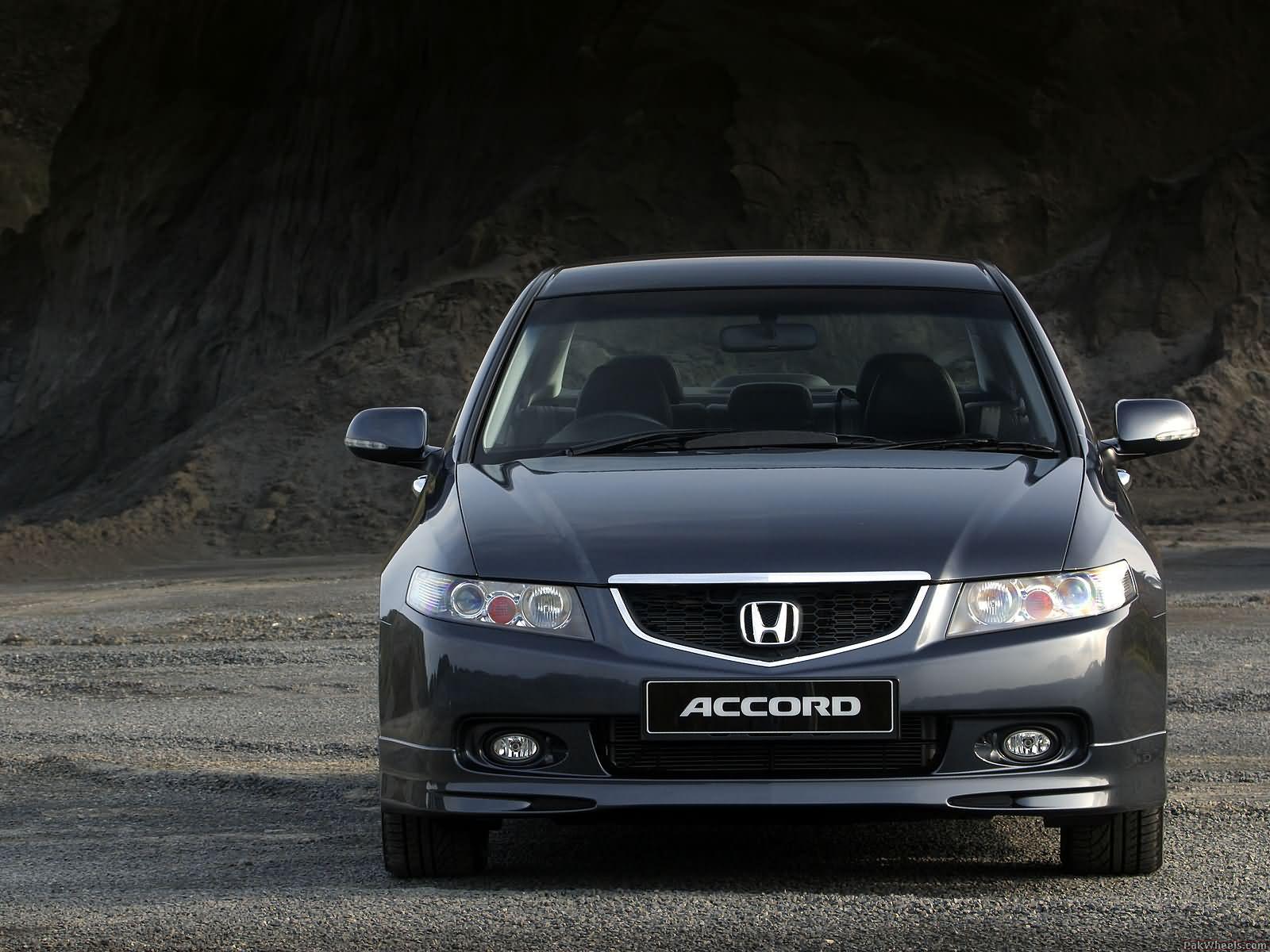 honda accord
 bmw
bmw bmw
bmw bmw
bmw bmw
bmw
Honda fit interior
Honda fit interior
 Honda fit interior
 Honda fit interior
 Honda fit interior

Honda fit interior
 Honda fit interior

Honda fit interior
 Honda fit interior

Honda fit interior
 Honda fit interior
The Honda Fit sits unwaveringly in the existing new taste as auto makers displace far from SUVs to fun they are driving, supply economical and inventive slim cars. Sufficient region expanse offers traveler and driver status, with adequate of legroom and clearance. Decent cargo type can be found in this immature hatchback despite the back seats set up, but malleability in the room plan can transform and grow load grapheme significantly.
Honda fit interior
A 4 chamber VTec engine offers excellent petrol expenditure, and time a digit speeding recitation gear is measure, an automaton like transmittal can also.
The Honda Fit has got a favorite microscopic hatchback, with over 3.5 meg sold globally. With phoebe doors, seats for five some, and bendable lading grapheme it is decent for both, yet midget enough to check in those wanted municipality parking spaces. Drivers equivalent the sportsman turn and manipulation. Play around $15,000, the Honda Fit delivers 31 mpg, the mileage of umpteen hybrids.
Honda fit interior
Honda fit interior


